

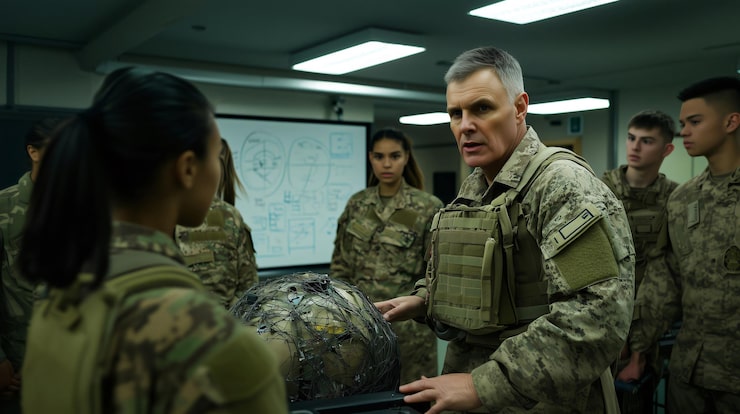
Officers Leadership Lessons form the foundation of effective leadership in both military and civilian contexts. Military training instills discipline, strategic thinking, and resilience, teaching leaders to navigate complex situations with confidence. These lessons are not only applicable on the battlefield but also in corporate offices, startups, and community leadership roles. Understanding how officers cultivate leadership qualities can inspire anyone to strengthen their own ability to lead and motivate others.
Take the story of Captain Rohan, a young officer who faced extreme challenges during a field exercise. Initially overwhelmed by the responsibility of leading a diverse team, he learned through structured military protocols, real-time problem-solving, and peer feedback that leadership is as much about empathy and adaptability as it is about command. His journey reflects the essence of Officers Leadership Lessons, which blend strategic rigor with human-centric guidance.
Discipline: The Backbone of Leadership
One of the first lessons officers learn is discipline. Military routines are structured to promote punctuality, reliability, and accountability. Leaders who embrace discipline set the tone for their teams, ensuring that objectives are met efficiently.
Discipline goes beyond personal habits; it extends to decision-making under pressure. Officers are trained to maintain composure during high-stakes scenarios, balancing urgency with careful planning. For example, in a simulated crisis exercise, an officer must coordinate logistics, anticipate challenges, and ensure team safety—all while adhering to strict protocols. Applying these Officers Leadership Lessons in daily life teaches the importance of consistency and self-control in achieving long-term goals.
Effective Communication and Team Cohesion
Another critical aspect of military leadership is communication. Officers are trained to convey instructions clearly, listen actively, and provide constructive feedback. Miscommunication in a military setting can have severe consequences, making clarity and precision essential.
Team cohesion is closely tied to communication. Officers learn to understand team dynamics, motivate diverse personalities, and foster trust. A real-life example is Lieutenant Anjali, who led a multi-unit drill where success depended on synchronizing multiple teams under time pressure. Her ability to communicate purpose, delegate tasks effectively, and encourage collaboration ensured the mission’s success. Integrating such Officers Leadership Lessons into organizational or project management settings can enhance productivity and team morale.
Decision-Making Under Pressure
Military training emphasizes rapid and strategic decision-making. Officers must assess situations, weigh risks, and act decisively—often with incomplete information. This skill translates directly into business and personal contexts, where leaders face time-sensitive challenges requiring thoughtful yet swift decisions. (Officers Leadership Lessons)
For instance, during field operations, an officer may encounter unexpected obstacles such as equipment failure or environmental hazards. The ability to remain calm, analyze alternatives, and implement the best course of action is a direct outcome of rigorous training. Learning to make informed decisions under pressure is one of the most valuable Officers Leadership Lessons, highlighting the balance between courage and calculated judgment.
Adaptability and Resilience
Adaptability is another cornerstone of military leadership. Officers are trained to respond to ever-changing circumstances, whether it’s shifting mission objectives, resource constraints, or team dynamics. Resilience, the capacity to recover from setbacks, is nurtured through repeated exposure to challenging scenarios.
For example, Captain Meera faced a scenario where unforeseen weather conditions disrupted a scheduled exercise. By quickly adapting her strategy and maintaining her team’s morale, she achieved the mission objectives without compromising safety. Such experiences illustrate how Officers Leadership Lessons teach leaders to embrace change, innovate under pressure, and maintain focus on overarching goals despite setbacks.
Mentorship and Developing Future Leaders
Military officers are not just responsible for their immediate tasks; they are also mentors for junior personnel. Mentorship cultivates leadership continuity, ensuring that knowledge, skills, and values are passed down effectively. Officers learn to identify potential, provide guidance, and empower others to take initiative.
A key example is Major Arjun, who actively mentored cadets, helping them navigate the challenges of training while fostering confidence and critical thinking. This mentorship approach is a vital Officers Leadership Lesson, emphasizing the importance of investing in people, recognizing talent, and cultivating the next generation of leaders.
Strategic Thinking and Vision
Officers are trained to think beyond immediate tasks, focusing on long-term objectives and mission outcomes. Strategic thinking involves analyzing patterns, anticipating challenges, and planning resources effectively.
During strategic simulations, officers must consider multiple variables such as terrain, logistics, team capability, and potential opposition strategies. This high-level planning encourages a visionary mindset, enabling leaders to align day-to-day actions with broader organizational goals. Incorporating this element of Officers Leadership Lessons into civilian leadership ensures that teams move cohesively toward shared objectives while adapting to evolving circumstances.
Ethical Leadership and Integrity
Integrity is central to military leadership. Officers are expected to act ethically, make fair decisions, and take responsibility for their actions. Ethical leadership fosters trust, credibility, and loyalty within teams.
Lieutenant Kavya, for instance, was faced with a scenario where shortcuts could have yielded quick results but compromised ethical standards. By choosing transparency and adherence to values, she not only maintained her team’s trust but also reinforced a culture of accountability. This lesson underscores how Officers Leadership Lessons extend beyond tactics, emphasizing character as the foundation of sustainable leadership.
Continuous Learning and Self-Improvement
Finally, officers are lifelong learners. Military training emphasizes continuous improvement through after-action reviews, feedback loops, and professional development courses. Leaders are encouraged to reflect on successes and failures alike, fostering a mindset of growth and adaptability. (Officers Leadership Lessons)
For example, after a complex field exercise, officers conduct debriefing sessions to evaluate performance, identify areas for improvement, and adjust strategies for future scenarios. Applying this commitment to learning in professional and personal contexts ensures that leadership skills evolve with changing environments.
Read also:
8 lakh ctc in hand salary
spg salary
spg commando qualification
cgda auditor salary
नातेवाईक टोमणे मराठी स्टेटस स्वार्थी लोक
नवरा बायको स्टेटस
positive suvichar in gujarati
