

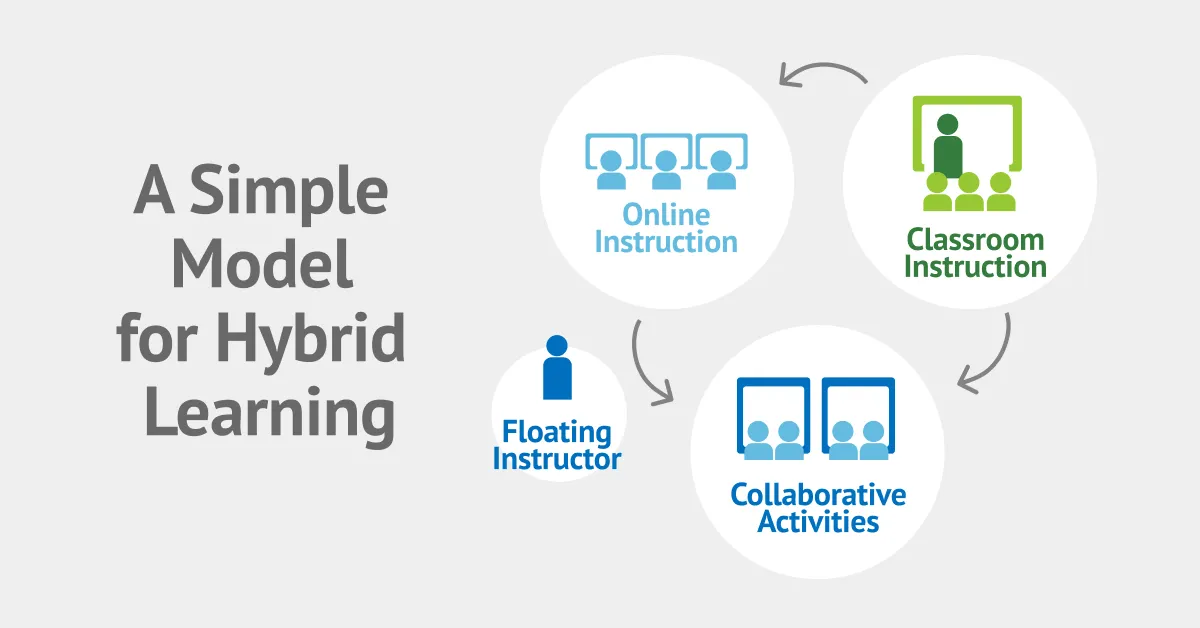
Hybrid learning model is reshaping the modern classroom by blending traditional face-to-face instruction with structured online learning experiences. Instead of choosing between physical classrooms or digital platforms, schools and universities are combining both to create a more flexible and inclusive system.
The shift didn’t happen overnight. While technology had already entered classrooms, global disruptions accelerated the adoption of blended approaches. Educators realized that learning doesn’t need to be confined to four walls. At the same time, they recognized the irreplaceable value of human interaction.
Today, institutions around the world are refining this balanced approach, creating systems that prioritize engagement, accessibility, and measurable outcomes.
Understanding the Hybrid Learning Model in Practice
The Hybrid learning model combines scheduled in-person sessions with structured online components. Students might attend classes on campus a few days a week while completing assignments, discussions, and assessments digitally.
This model differs from fully online learning because face-to-face engagement remains central. It also differs from traditional education because technology plays an intentional instructional role rather than acting as a simple add-on.
In many universities, lectures are recorded and uploaded to learning platforms. Students review them at their own pace, while classroom time focuses on discussion, problem-solving, and collaboration.
This balance allows deeper understanding instead of passive note-taking.
Why the Hybrid Learning Model Is Gaining Popularity
Flexibility is one of the main reasons the Hybrid learning model is expanding across educational institutions. Students today juggle academics with internships, part-time jobs, and personal responsibilities.
By offering online components, institutions reduce commuting time and provide scheduling flexibility. At the same time, in-person sessions maintain academic discipline and peer connection.
A working professional pursuing a postgraduate degree once shared how hybrid scheduling allowed her to attend campus workshops on weekends while completing lectures online during weekday evenings. Without this format, continuing education would have been nearly impossible.
Flexibility increases enrollment while maintaining academic standards.
Hybrid Learning Model and Student Engagement
Engagement is often cited as a challenge in both fully online and traditional settings. The Hybrid learning model addresses this by diversifying how students interact with content.
Online forums encourage quieter students to participate in discussions. Live classroom debates build communication skills. Interactive quizzes and multimedia resources enhance retention.
When thoughtfully designed, hybrid courses encourage students to take ownership of their learning. They prepare before in-person sessions and arrive ready to engage meaningfully.
This active learning approach aligns with research-backed pedagogical strategies that improve comprehension and long-term retention.
Technology as the Backbone of the Hybrid Learning Model
Reliable technology infrastructure is essential for any successful Hybrid learning model. Learning management systems organize course materials, track attendance, and manage assessments.
Video conferencing tools enable live sessions for students who cannot attend physically. Cloud-based collaboration platforms allow group projects to continue beyond classroom hours.
Mobile compatibility is particularly important. Many students access course materials through smartphones or tablets. Ensuring responsive design enhances accessibility and inclusivity.
When technology works seamlessly, students focus on learning rather than troubleshooting.
The Role of Teachers in a Hybrid Learning Model
In the Hybrid learning model, teachers transition from being sole knowledge providers to facilitators of learning experiences. Their role becomes more dynamic and strategic.
Instead of delivering long lectures, educators curate digital resources, moderate discussions, and design interactive classroom activities.
Professional development plays a crucial role here. Teachers must understand instructional design principles and digital tools to maximize effectiveness.
When instructors feel confident navigating both physical and virtual environments, the learning experience becomes cohesive rather than fragmented.
Benefits of the Hybrid Learning Model for Institutions
Institutions adopting the Hybrid learning model often experience operational advantages. Classroom space can be optimized, reducing overcrowding. Digital resources can be reused and updated efficiently.
This model also expands geographic reach. Students who live far from campus can participate in certain sessions remotely, broadening the institution’s potential audience.
Data analytics integrated into digital platforms provide insights into attendance patterns, participation rates, and assessment performance.
These insights help administrators make informed decisions regarding curriculum adjustments and student support systems.
Hybrid Learning Model and Personalized Education
Personalization is one of the strongest benefits of the Hybrid learning model. Online components allow students to revisit recorded lectures, pause complex explanations, and review supplementary materials at their own pace.
Adaptive learning systems can offer tailored exercises based on performance. Instructors can monitor progress and intervene early when necessary.
Meanwhile, in-person sessions provide opportunities for mentorship and immediate clarification.
This balanced personalization improves academic confidence and reduces performance gaps.
Challenges Within the Hybrid Learning Model
While promising, the Hybrid learning model comes with challenges. Maintaining consistent engagement across both environments requires careful planning.
Students may feel overwhelmed if online tasks are poorly aligned with classroom objectives. Clear communication and structured schedules are essential.
Digital inequality is another concern. Not all students have reliable internet access or devices. Institutions must consider lending programs or on-campus digital hubs to ensure equitable participation.
Balancing screen time with meaningful face-to-face interaction also requires thoughtful curriculum design.
Hybrid Learning Model and Assessment Strategies
Assessment methods must evolve alongside instructional methods. In a Hybrid learning model, traditional exams are often complemented by digital quizzes, peer reviews, and project-based evaluations.
Online assessments provide immediate feedback, helping students identify improvement areas quickly. Classroom-based presentations and discussions evaluate communication and critical thinking skills.
Combining multiple assessment formats ensures comprehensive evaluation.
Transparency and clear grading rubrics enhance fairness and build trust among students.
EEAT Principles in the Hybrid Learning Model
Experience, Expertise, Authoritativeness, and Trustworthiness are critical when implementing a Hybrid learning model.
Institutions must rely on evidence-based teaching practices rather than trends. Faculty should receive proper training in blended instruction methodologies.
Clear data protection policies ensure student privacy within digital platforms. Accreditation standards must remain consistent regardless of delivery format.
When implemented responsibly, hybrid education maintains academic credibility while embracing innovation.
Real Stories from Hybrid Classrooms
A university professor teaching engineering redesigned her course under the Hybrid learning model. Students watched theoretical lectures online before attending lab sessions.
Classroom time was dedicated to hands-on experiments and real-world problem-solving. Students reported higher satisfaction because they understood theory before entering practical sessions.
In another case, a high school adopted hybrid scheduling during infrastructure renovations. Surprisingly, attendance improved, and disciplinary incidents decreased.
Students appreciated the flexibility, while teachers noticed stronger independent study habits.
These stories highlight that successful hybrid systems depend on intentional design rather than temporary adjustments.
The Future Outlook of the Hybrid Learning Model
As educational technology advances, the Hybrid learning model will likely integrate artificial intelligence, immersive simulations, and predictive analytics.
AI-powered tutoring systems may provide real-time explanations during online sessions. Virtual reality labs could simulate complex experiments.
Institutions must ensure these innovations remain accessible and ethically implemented.
The goal is not to replace teachers or physical classrooms but to enhance learning experiences.
Read also :-
shiksha course
e shikshakosh bihar gov in login portal
i shiksha course
www.e shikshakosh