

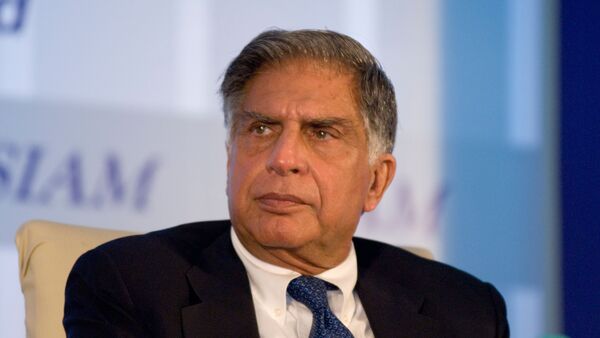
Ratan Tata Biography is the story of a man whose humility, vision, and leadership redefined the essence of Indian entrepreneurship. As one of India’s most respected industrialists and philanthropists, Ratan Tata has not only transformed the Tata Group into a global powerhouse but has also set an unmatched example of ethical business conduct and humanity. His life is a blend of success, compassion, and integrity, making him a true inspiration for generations to come.
Early Life And Family Background
Born on December 28, 1937, in Mumbai, Ratan Naval Tata belonged to one of India’s most prominent business families — the Tata family. He is the son of Naval Tata and Sooni Tata and was raised by his grandmother, Lady Navajbai Tata, after his parents separated when he was a child. Despite belonging to a wealthy lineage, Ratan Tata’s upbringing was modest and disciplined, focused on strong moral values and self-reliance. (Ratan Tata Biography)
He completed his schooling at the Cathedral and John Connon School in Mumbai and later attended the Bishop Cotton School in Shimla. Ratan Tata went on to pursue a degree in architecture from Cornell University in the United States and later completed an advanced management program at Harvard Business School.
His early education and exposure to global perspectives shaped his vision and leadership approach, which combined innovation, ethics, and compassion.
Career Beginnings And Entry Into Tata Group
The Ratan Tata Biography is a testament to his determination and humility. Despite being the heir to India’s largest conglomerate, he started his career at the grassroots level. In 1962, he joined the Tata Group and began working on the shop floor of Tata Steel, handling furnaces and shoveling limestone. This early experience helped him understand the company from its foundation and develop respect for every worker in the organization.
Over the years, Ratan Tata worked in various Tata companies, learning the business inside out. His ability to connect with employees and understand both technical and managerial aspects made him a natural leader.
Rise To Leadership
Ratan Tata took over as the chairman of the Tata Group in 1991, succeeding his uncle, J.R.D. Tata. When he assumed leadership, the Tata empire was vast but fragmented, consisting of more than 100 companies operating independently. Ratan Tata’s challenge was to unify and modernize the group while maintaining its core values of trust and integrity. (Ratan Tata Biography
His leadership style was visionary yet people-centric. He emphasized global expansion, innovation, and modernization. Under his guidance, Tata Group made several bold acquisitions that put India on the global business map, including Jaguar Land Rover, Tetley Tea, Corus Steel, and Daewoo Motors. These moves turned Tata from a domestic brand into an international name.
Challenges And Life Struggles
The Ratan Tata Biography would be incomplete without discussing his challenges. Taking over during India’s liberalization period, he faced criticism for making risky international investments. Many doubted his decisions to acquire global brands, but his foresight proved critics wrong.
During the 2008 global financial crisis, Tata Group faced significant difficulties, especially with the Jaguar Land Rover acquisition. However, Ratan Tata’s faith in the brand and its employees led to a remarkable turnaround, making JLR one of the group’s most profitable ventures. (Ratan Tata Biography)
Another example of his resilience came with the launch of the Tata Nano, aimed at providing affordable mobility for Indian families. Although the car faced production and marketing setbacks, it demonstrated his deep concern for the common man.
Career Achievements And Leadership Legacy
The Ratan Tata Biography shines brightest in his achievements. Under his leadership, Tata Group’s revenues grew over 40 times, and profit multiplied over 50 times. He turned Tata into a global enterprise with operations in more than 100 countries and employees from diverse backgrounds.
Ratan Tata’s leadership philosophy focused on ethics, empathy, and innovation. He believed in leading by example and earning respect rather than demanding it. His contributions earned him numerous awards, including the Padma Bhushan (2000) and the Padma Vibhushan (2008) — two of India’s highest civilian honors.
He also received international recognition from institutions like Harvard, Cambridge, and Carnegie Mellon University for his outstanding leadership and humanitarian work. (Ratan Tata Biography)
Philanthropy And Social Work
Beyond business, Ratan Tata Biography highlights his deep commitment to philanthropy. Nearly 66% of Tata Sons’ profits are donated to charitable trusts that support education, health, rural development, and scientific research.
He personally supports causes like child education, healthcare, and disaster relief. Under his guidance, Tata companies have been instrumental in launching CSR initiatives that have touched millions of lives. His efforts to promote clean energy, sustainable business practices, and rural entrepreneurship continue to inspire India’s younger generation.
Ratan Tata’s humility is reflected in his lifestyle — he lives simply, avoids lavish displays of wealth, and focuses on giving back to society. His belief that “wealth is a responsibility, not a privilege” truly defines his character.
Personal Life And Character
Despite being one of the most admired business figures in the world, Ratan Tata has always maintained a private and grounded personal life. Known for his soft-spoken nature and simplicity, he never married, dedicating his life to his work and humanitarian efforts. (Ratan Tata Biography)
He has often shared that he came close to marriage several times, but circumstances prevented it. Instead, he chose to devote his energy to building businesses that improve lives and create opportunities for others.
Ratan Tata’s love for animals, especially dogs, is well-known. He personally takes care of stray dogs near the Tata headquarters and advocates for animal welfare. This compassion and empathy extend to all aspects of his life.
Net Worth And Global Recognition
Although Ratan Tata belongs to one of the wealthiest families in India, his personal net worth remains modest, estimated at around $1 billion. This is because most of his wealth is held in charitable trusts, not for personal gain.
His wealth lies in the impact he has made — building industries, empowering people, and earning global respect. The Ratan Tata Biography exemplifies the idea that true success is measured not by money but by the positive change one brings to society.
Even after retiring as chairman in 2012, Ratan Tata continues to guide young entrepreneurs through the Tata Trusts and by investing in startups such as Ola, Paytm, and Zivame. His encouragement to the youth to dream big and lead with ethics makes him a timeless mentor.
Legacy Of An Inspiration
The Ratan Tata Biography stands as a beacon of integrity, leadership, and compassion. He is more than a business magnate — he is a symbol of hope, humility, and selfless service. His belief that “businesses should serve society, not just profit from it” has reshaped India’s corporate culture forever.
From transforming the Tata Group into a global brand to becoming the heart of India’s philanthropic efforts, Ratan Tata’s life proves that true greatness lies in purpose, not power. He remains an inspiration for every individual who believes in building success with honesty, kindness, and courage.
Read also:
zainab ravdjee age
aaman devgan age
swapnil kusale
natalia janoszek age
